Social Security Hearing Updates 2026: What to Expect and How to Prepare
Megan Reid
June 22, 2026
If you’re waiting for a Social Security Disability hearing or decision, it’s completely understandable to feel uncertain about what comes next. Recent updates from the Social Security Administration (SSA), including data through April 2026, highlight important changes that may affect both timing and how decisions are made.
While some trends suggest longer wait times, there can be opportunities for faster outcomes in certain cases. Here’s what you need to know and how to move forward with confidence.
Quick Take: What This Means for You
Hearing backlogs are increasing again in 2026
Wait times may gradually lengthen in some areas
There is an increase in On-the-Record decisions, leading to approvals without seeing a judge
Strong medical evidence can increase the chance of faster decisions
Preparation and support are more important than ever
Hearing Backlogs Are Increasing Nationwide
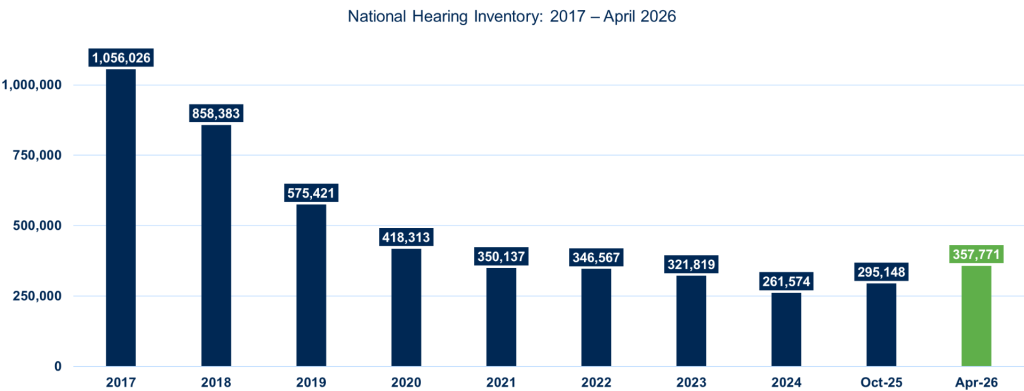
After years of steady improvement, the number of pending Social Security Disability hearing cases is rising again.
Hearing inventory reached a 30-year low in 2024
Since 2025, the number of pending cases has increased by 27%. As of April 2026, there are 357,771 cases pending nationally
This increase is largely due to more cases moving forward from earlier stages in the process, especially reconsideration decisions.
As more cases enter the hearing phase, it may take longer for hearings to be scheduled and decisions to be issued in some regions. While timelines vary, this shift highlights the importance of being prepared and staying engaged throughout the process.
While overall case volume is increasing at the hearing level, there is also encouraging news.
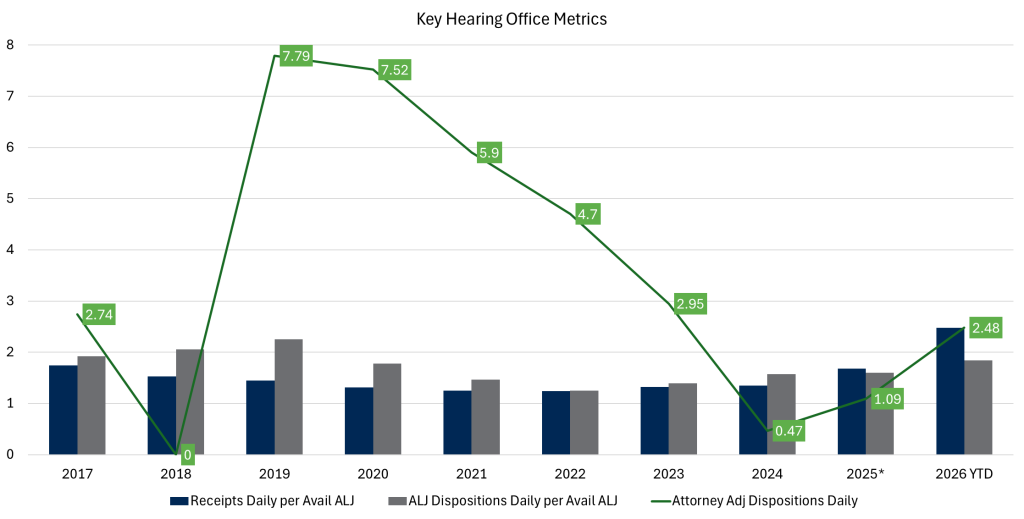
The SSA is making greater use of their senior attorney adjudicators to review claims and issue favorable On-the-Record (OTR) decisions, where cases are approved based on medical evidence without requiring a formal hearing. OTR activity declined from 2021 through 2024.
After increasing in early 2025 and declining in the second half of 2025, OTR decisions began increasing again in early 2026
Early FY 2026 showed no daily OTR activity, but daily averages increased to:
5.32 in February
5.65 in March
6.8 in April
The FY 2026 average currently sits at 2.48 daily decisions
Additionally, SSA is in the process of hiring additional administrative law judges. These hires will allow SSA to tackle the increased case volume and hopefully keep the volume of claims awaiting a hearing at a manageable level.
While the rate of OTR increases may seem modest, it is welcome news for individuals going through the arduous disability process. An OTR award means individuals may receive decisions more quickly without the added stress and anxiety of appearing before a judge and testifying about their impairments, symptoms and Limitations. Cases supported by strong medical evidence and complete documentation may be more likely to be considered for this faster path.
What These Trends Mean for Your Case
The Social Security hearing system is evolving again, balancing increasing case volume with new efficiencies.
In earlier years, decisions outpaced incoming cases, helping reduce backlog
More recently, that balance has shifted, contributing to the current increase in pending hearings
At the same time, the rise in OTR decisions is helping create alternative paths to resolution
Keeping your file and medical records up to date can increase your chances of receiving an OTR decision.
How to Stay Prepared During the Process
While system-wide changes are outside of your control, there are practical steps you can take to stay on track:
Keep your medical records up to date
Respond promptly to requests from Social Security
Ensure your documentation is complete and accurate
Work with experienced advocates who understand how to position your case effectively
These steps can help reduce unnecessary delays and position your case for every available opportunity.
You Don’t Have to Navigate This Alone
Waiting for a hearing or decision can feel overwhelming, especially when your health and financial stability are involved.
Even as the system adjusts, there are real opportunities for progress. Increased use of faster decision pathways is a positive sign, and with the right support, you can move through this process with greater clarity and confidence.
Our team is here to stand beside you, helping you build the strongest possible case, identify opportunities for earlier decisions, and stay informed at every stage.
Frequently Asked Questions
How long does it take to get a Social Security Disability hearing in 2026?
Wait times vary depending on location and case volume. For example, offices near Fort Myers, Florida report an average wait time of six months for a hearing whereas those in Washington and Massachusetts are closer to twelve months. In 2026, increasing inventory backlogs may lead to longer timelines in some areas. Staying organized and responsive can help keep your case moving as efficiently as possible.
Are Social Security hearing decisions getting faster?
In some cases, yes. While backlogs are increasing overall, the rise in On-the-Record decisions means some individuals may receive faster outcomes without a hearing.
Can I get approved for SSDI without a hearing?
Yes, some cases can be approved through the Initial and Reconsideration stages. Even claims that were denied at those two levels may still be approved without a hearing through an On-the-Record decision. This typically depends on the strength and completeness of your medical evidence.
What can I do to help avoid delays in my case?
You can help reduce delays by keeping records updated, responding quickly to SSA requests, and ensuring your case is complete and clearly presented.
What is an On-the-Record (OTR) decision?
An On-the-Record decision allows a claim to be approved based on documentation alone, without a hearing in front of an Administrative Law Judge. This can provide a faster and less stressful resolution for qualifying cases.
Why are Social Security hearing backlogs increasing again?
Backlogs are rising as more cases move through the first two levels and advance to the hearing level. This increase reflects higher overall case flow within the system.
A Quick Look at the Social Security Landscape in 2026
Last week, we attended the National Organization of Social Security Claimant Representatives (NOSSCR) Spring Conference in Baltimore, Maryland, where the nation’s largest trade association for Social Security representatives hosted its most extensive and diverse speaker lineup in nearly 50 years. This week, we wanted to share some key highlights from the conference, which covered a wide
May is Disability Insurance Awareness Month (DIAM), and we want our clients, friends, and family members to be educated about disability statistics in America and the importance of disability insurance. Disability Insurance Awareness Month is the perfect time to learn the facts about how likely you truly are to become disabled and to ensure that
Choosing Between SSER and SSDI: What You Need to Know in 2025
Individuals who find themselves unable to work due to a disabling condition will likely also find there are several important decisions to make to protect their financial future. For those disabled individuals who are over age 62 but have not yet reached “full retirement age” according to the Social Security Administration (SSA), an additional choice
At Advocator Advantage, a Brown & Brown Company, we are committed to helping individuals navigate the complexities of Social Security Disability Insurance (SSDI), Medicare, and the Ticket to Work program.
At Advocator Advantage, we understand that navigating SSDI, Medicare, and the Ticket to Work program can be complex and overwhelming. That’s why we’re here to address any questions or concerns you may have along your journey.